

Polines Designs Electric Shuttle Bus with Hydrogen System Support
Satria Dwiangga Sihantoro
Author
50
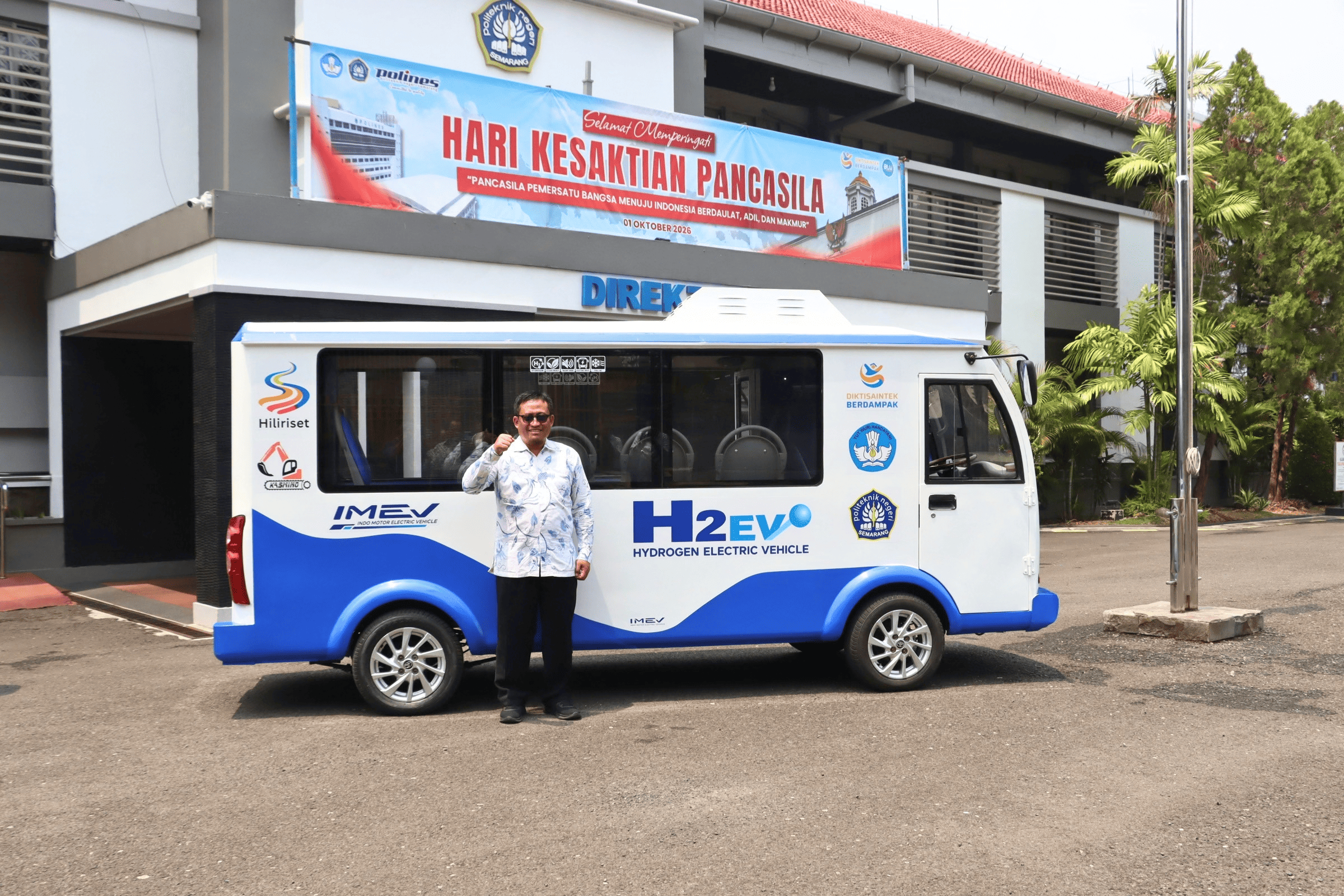
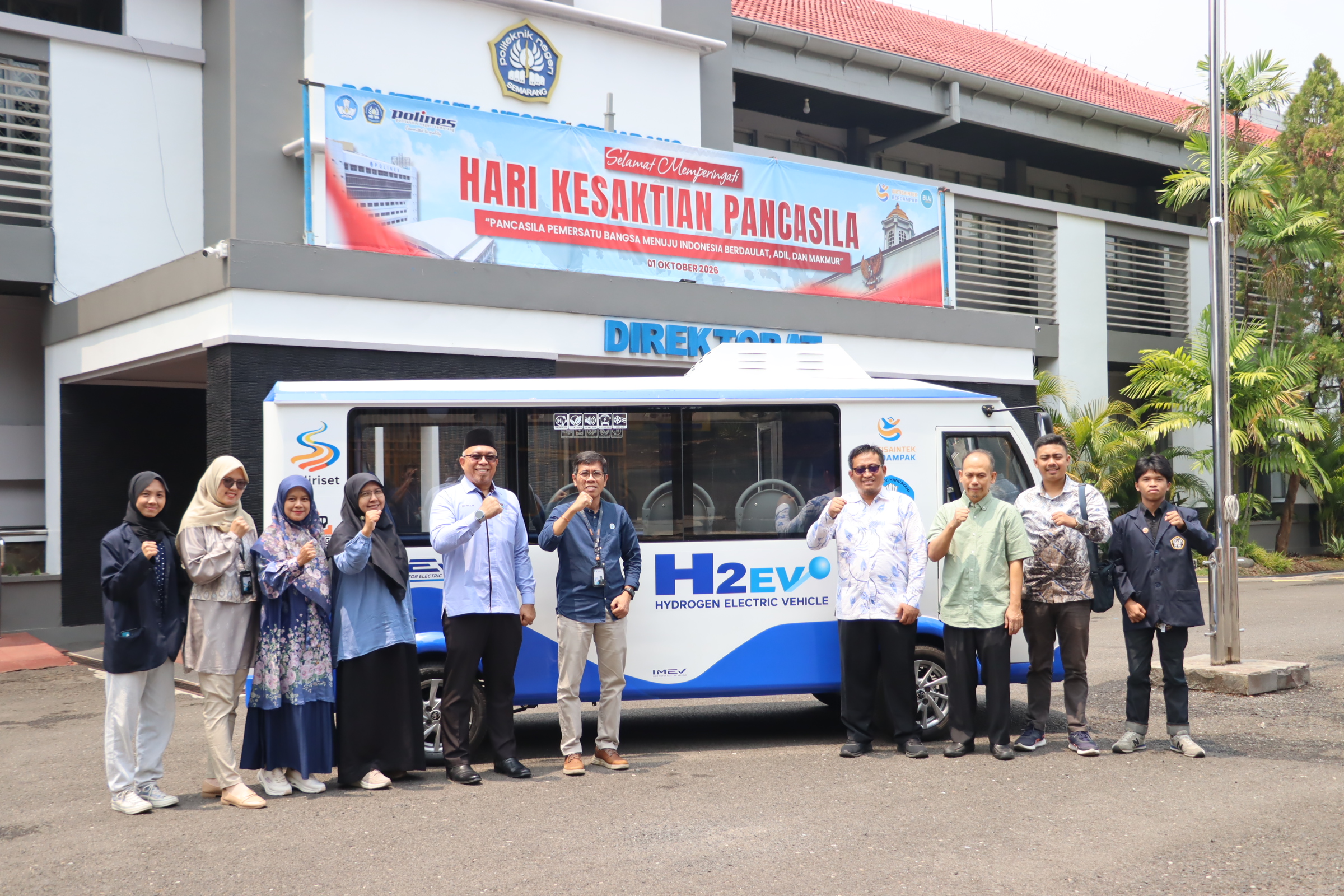
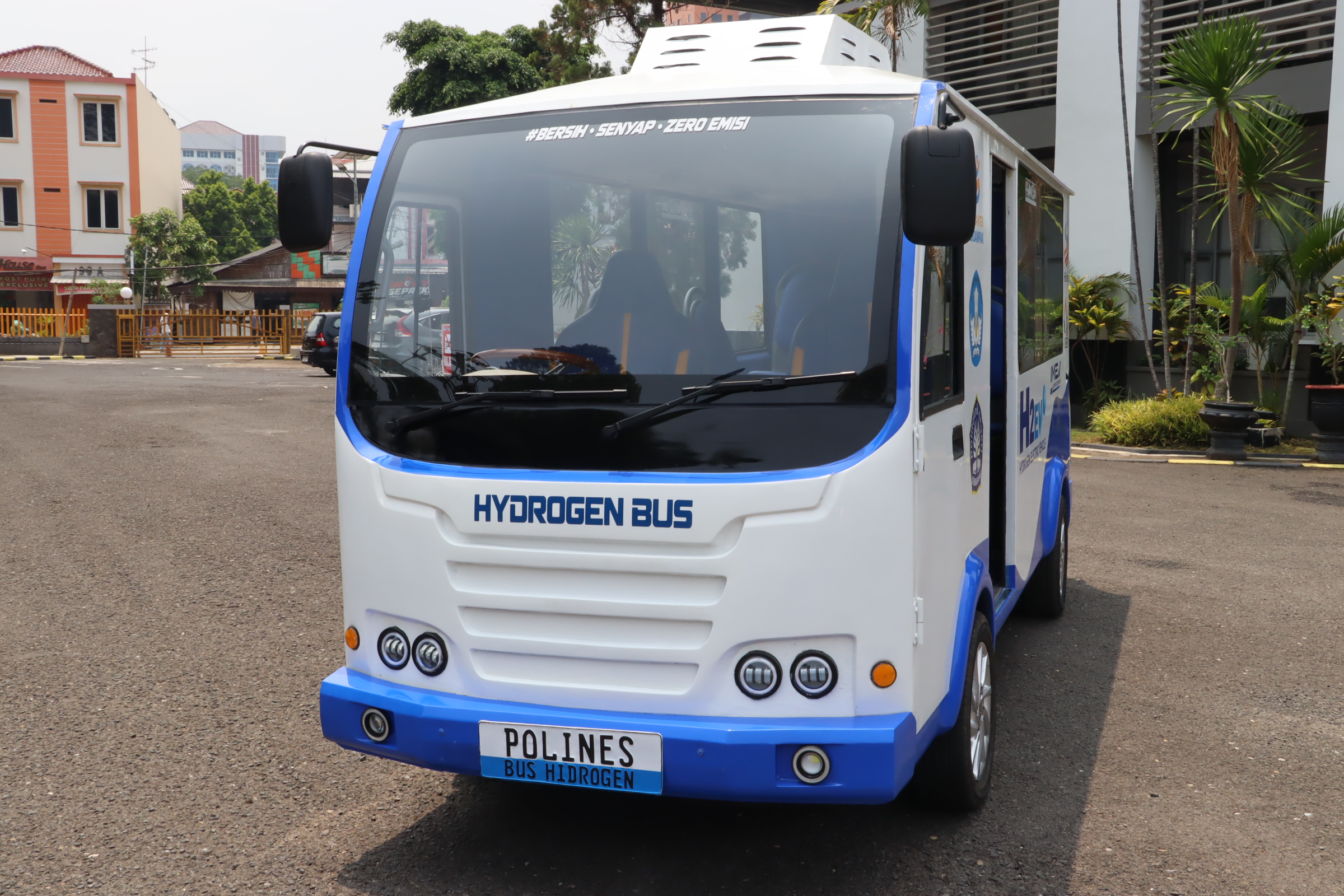
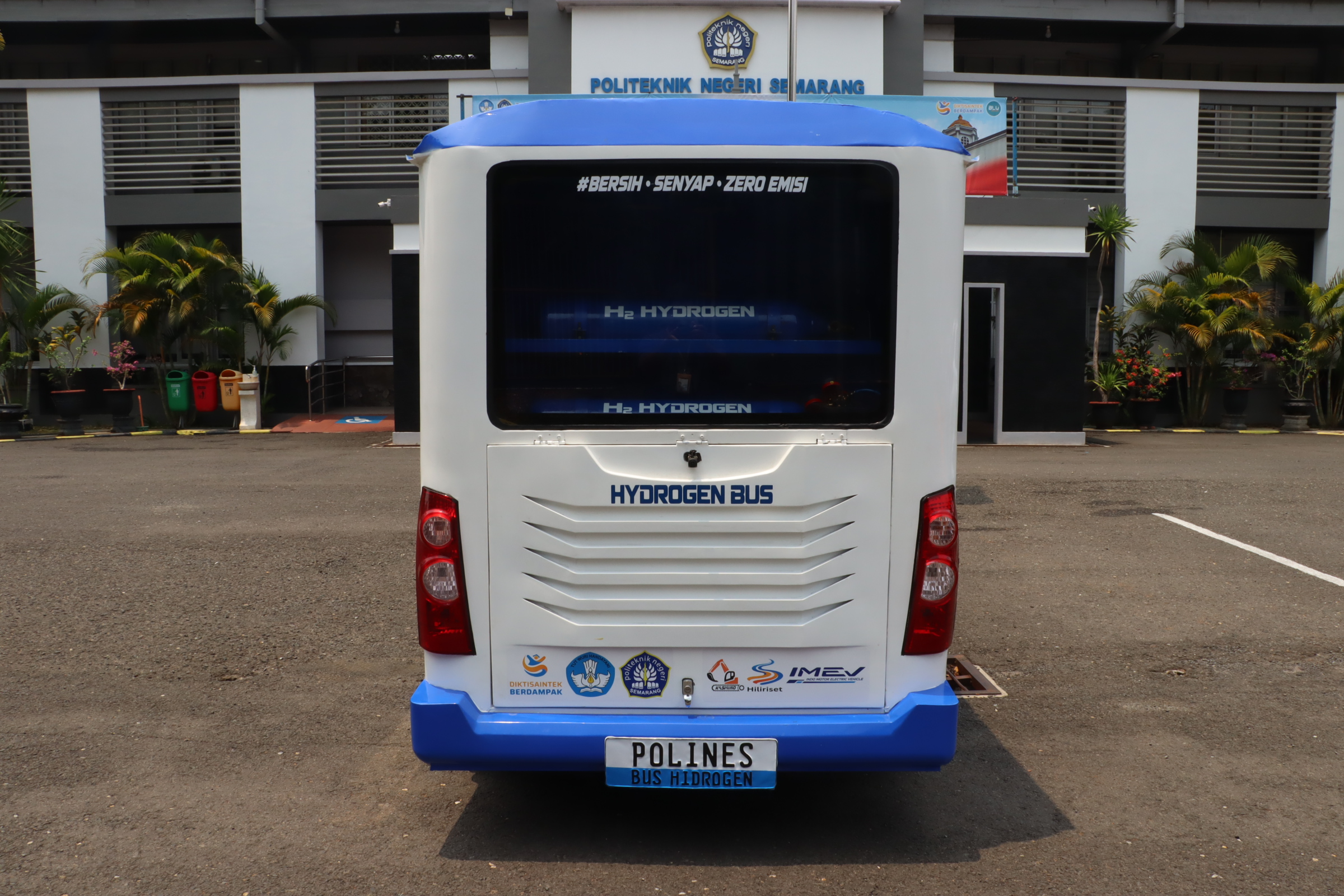
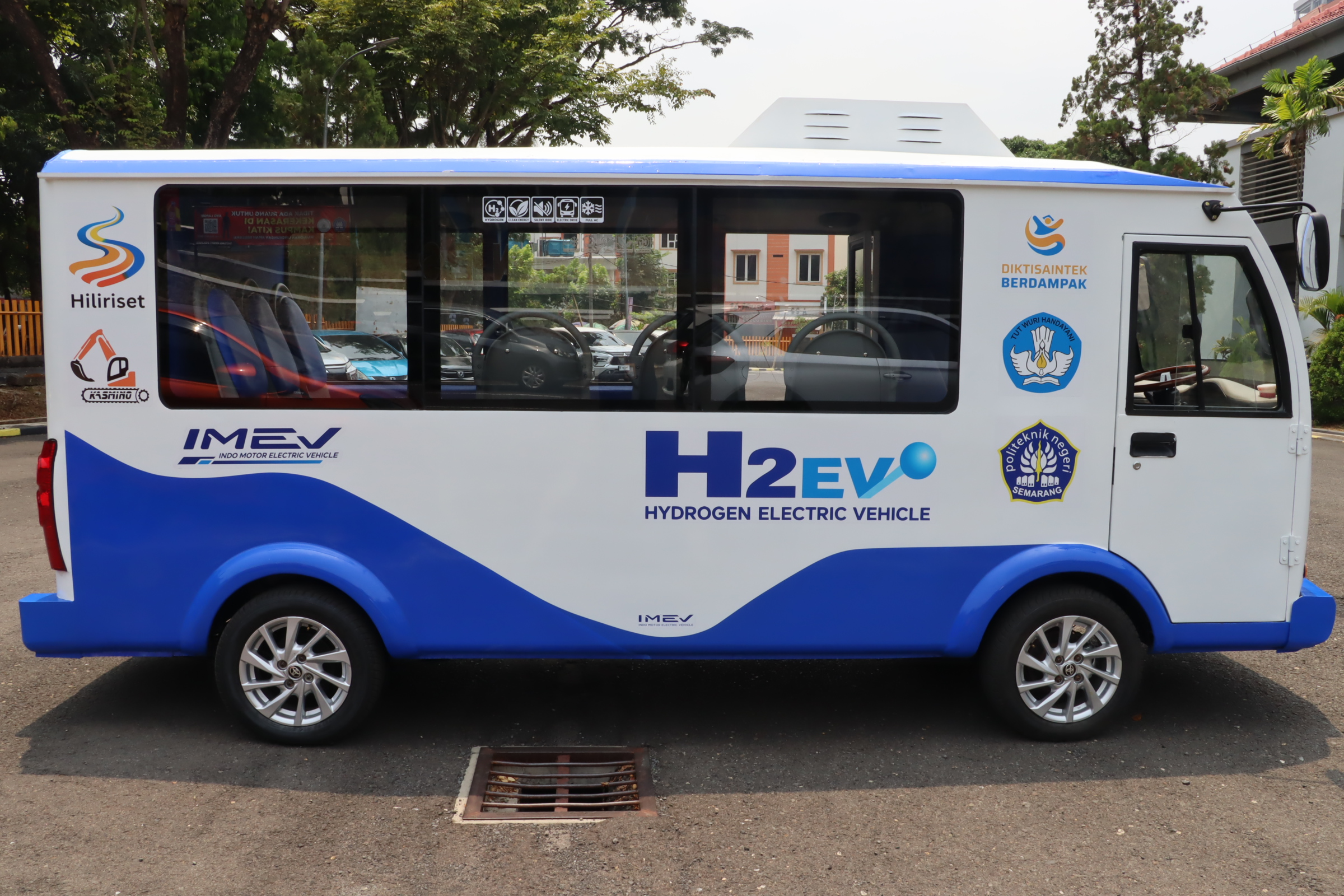
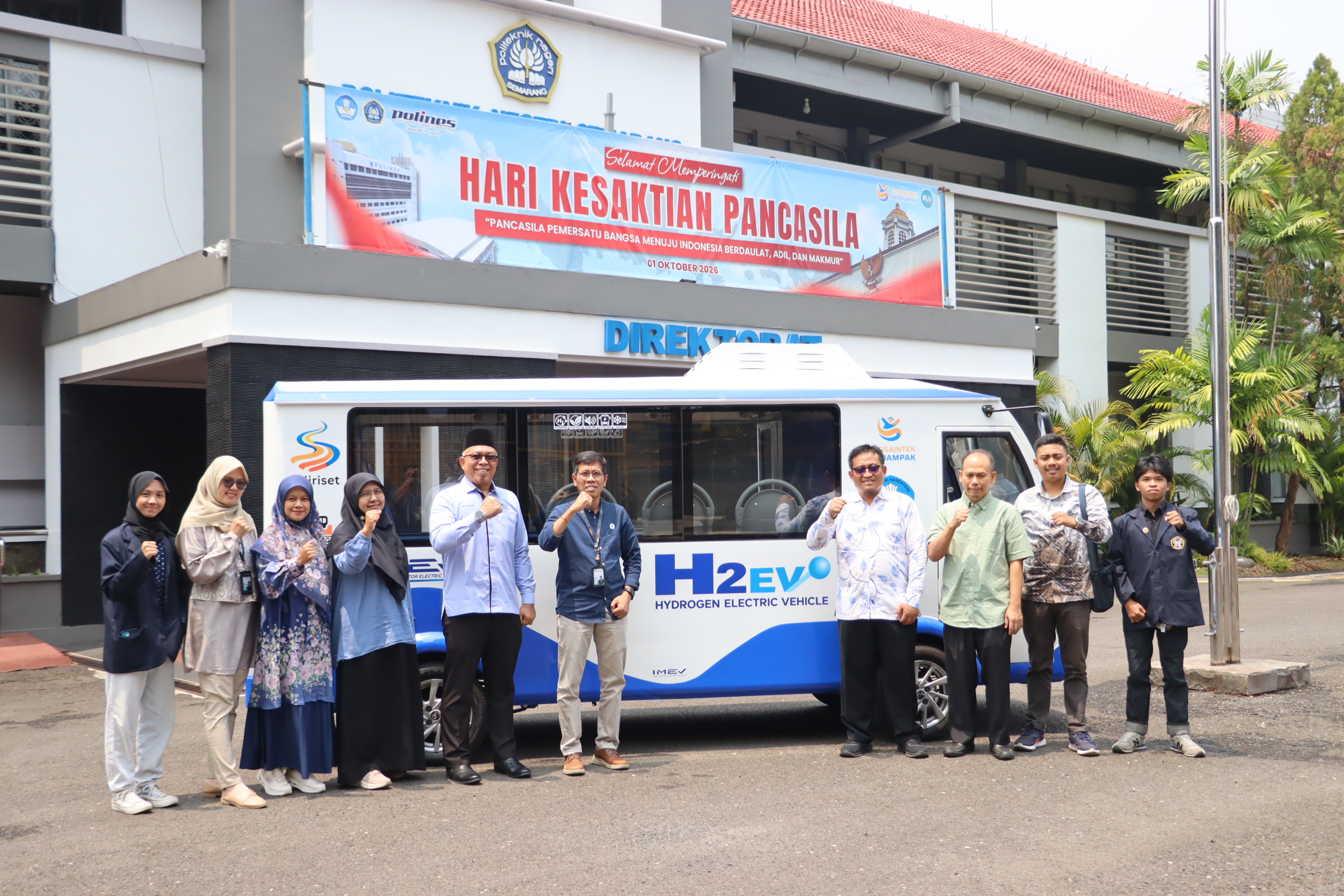
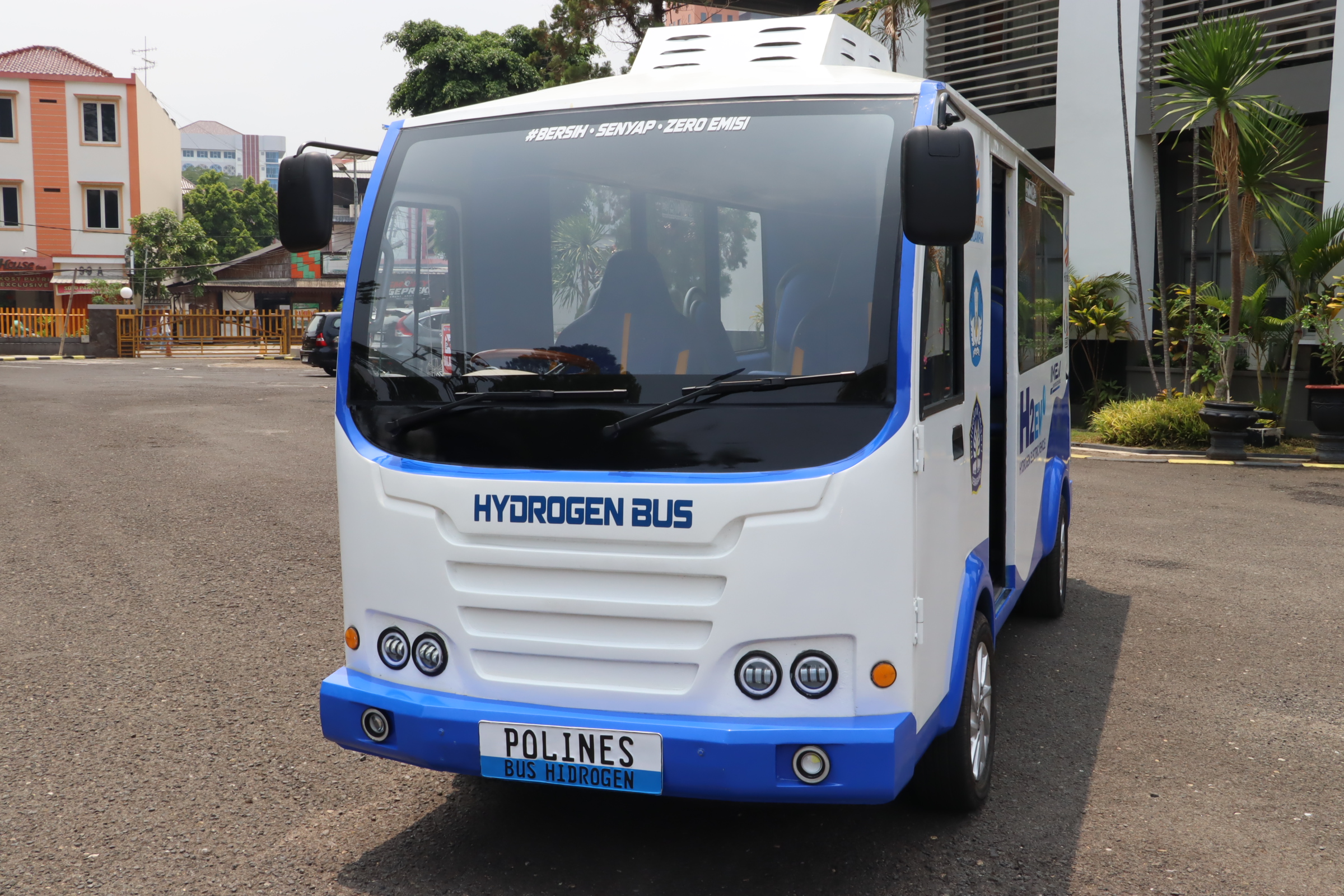
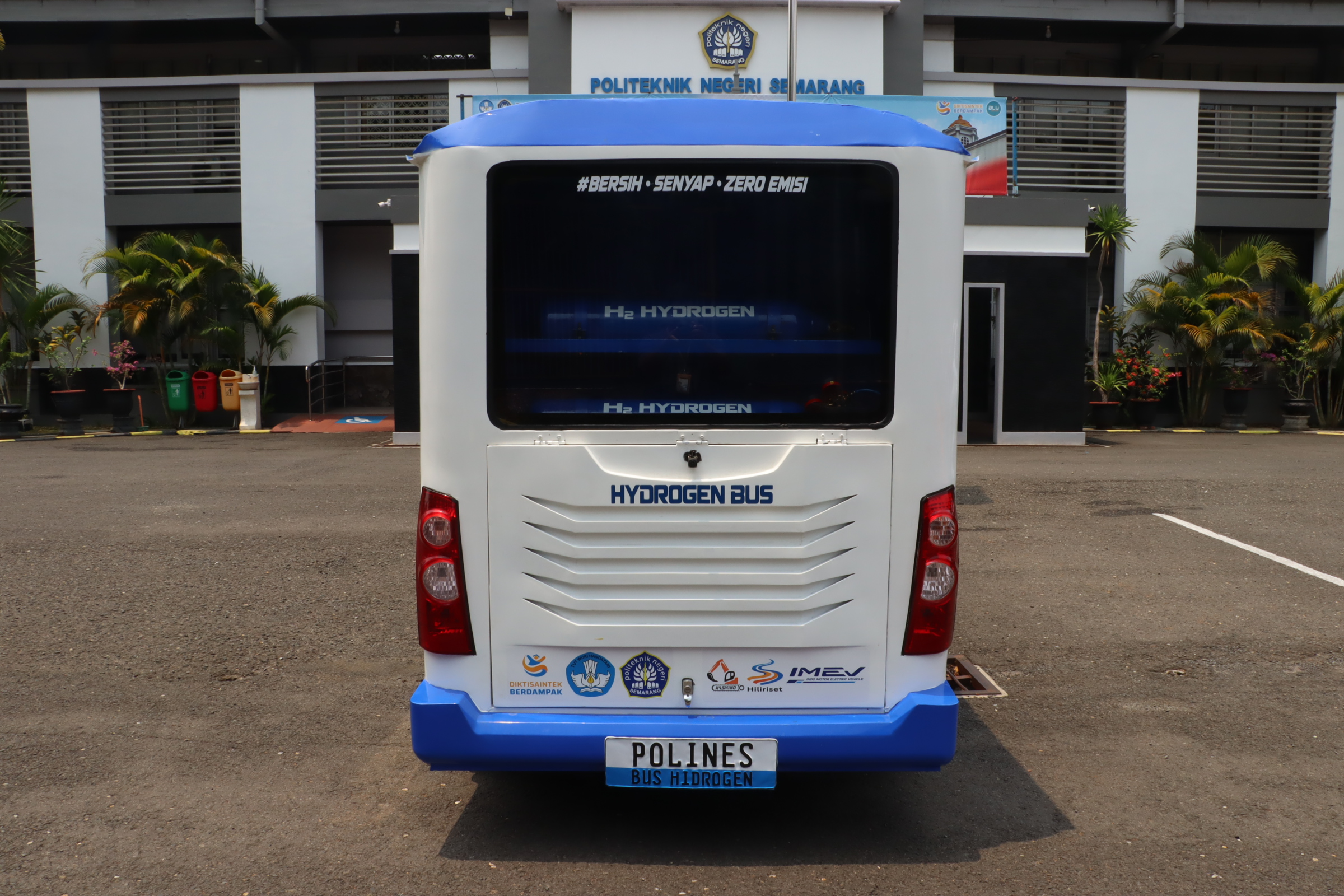
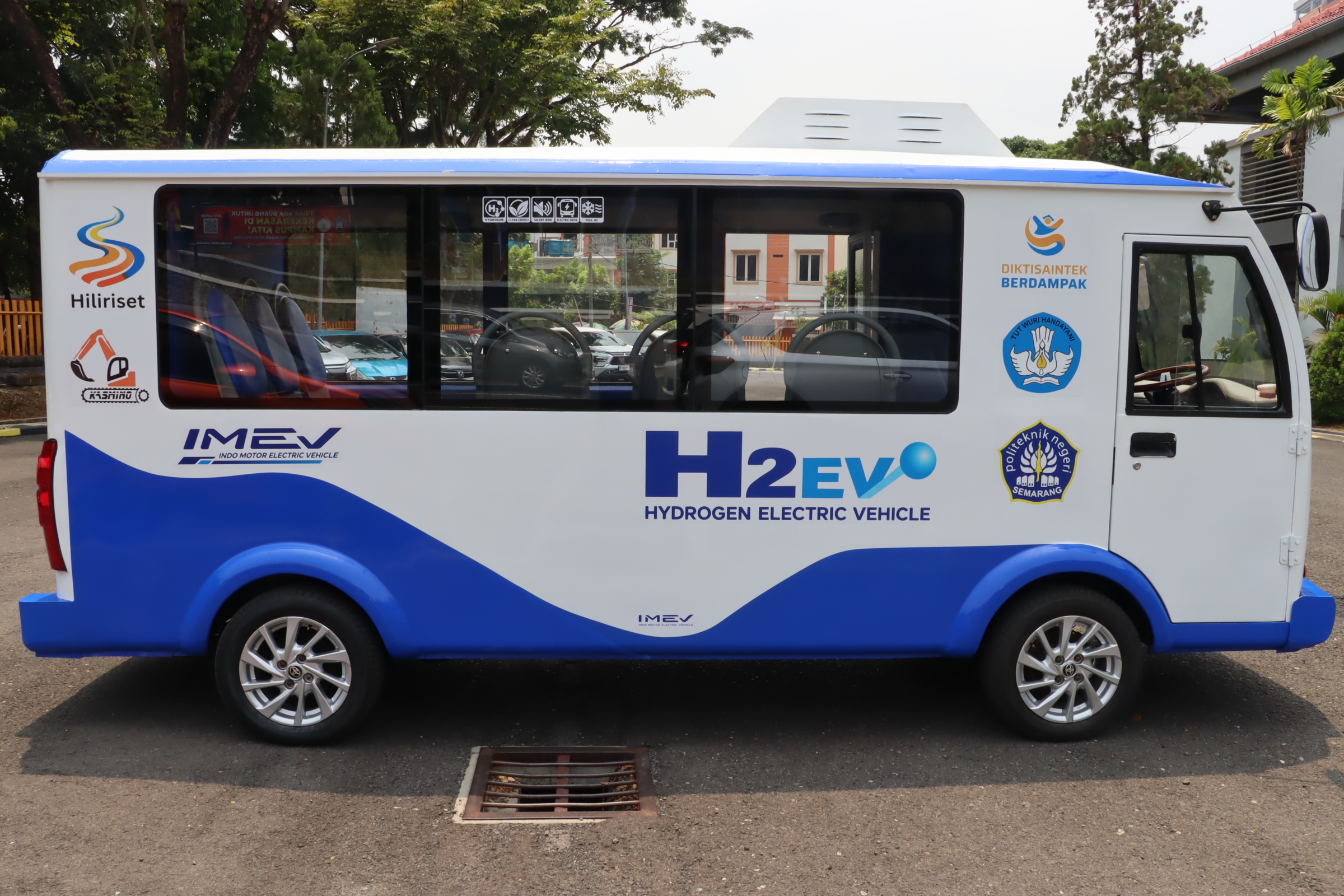
SEMARANG – Semarang State Polytechnic (POLINES) continues to promote the development of sustainable transportation technology innovations through the design of an electric shuttle bus with a hydrogen auxiliary system. This innovation was developed by Prof. Ir. Yusuf Dewantoro Herlambang, S.T., M.T., Ph.D., IPM., ASEAN Eng., a lecturer from the Department of Mechanical Engineering at POLINES as well as the Head of Technology Inventor/Researcher.
The design combines a battery as the primary power source to drive the vehicle with Proton Exchange Membrane (PEM) hydrogen fuel cell technology to support auxiliary electrical needs. This concept has the potential to be developed to support mobility within campus environments, industrial estates, and tourism destinations.
This development is part of Polines' efforts to promote applied research that integrates electric vehicle technology, control systems, energy management, and hydrogen utilization.
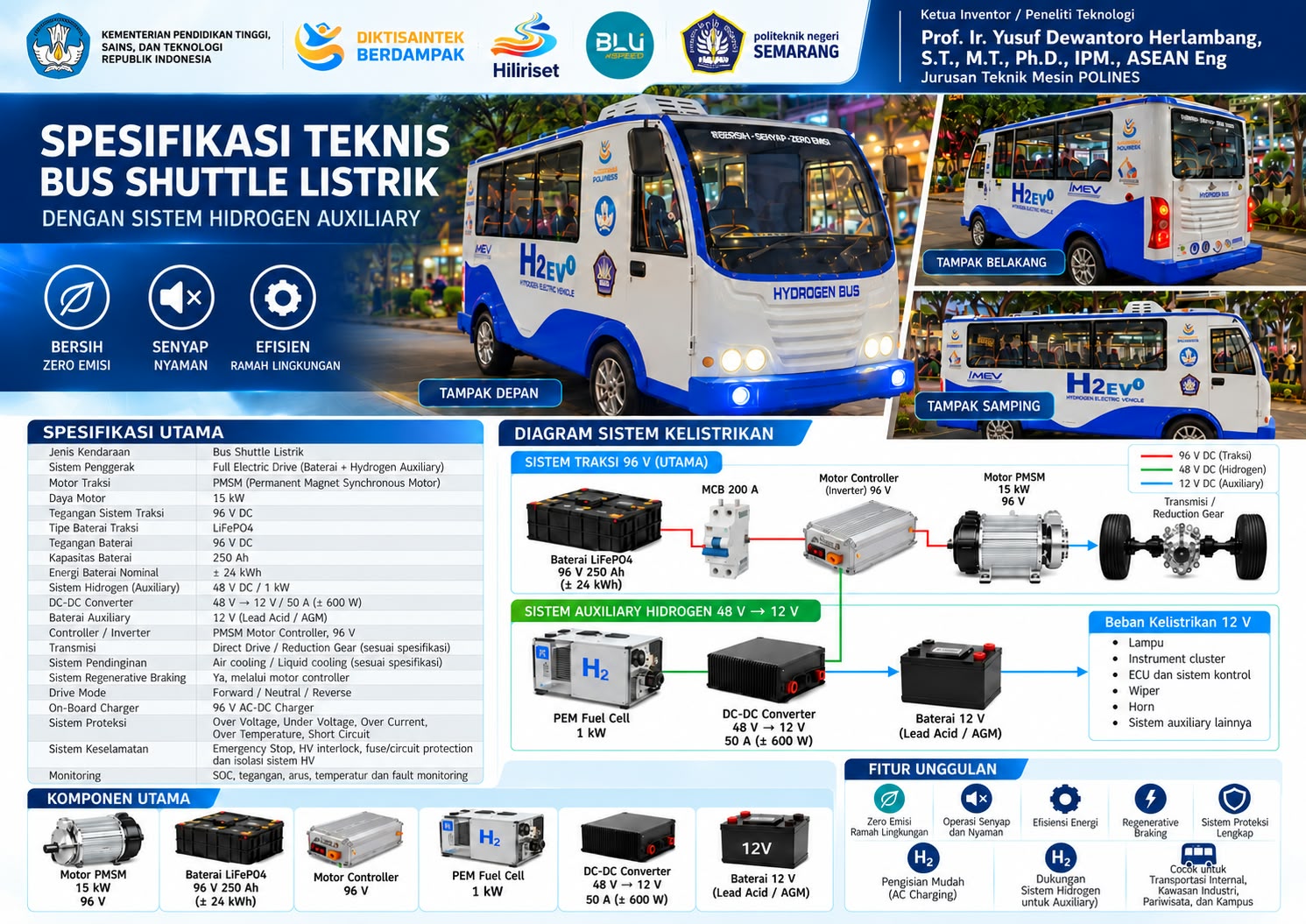
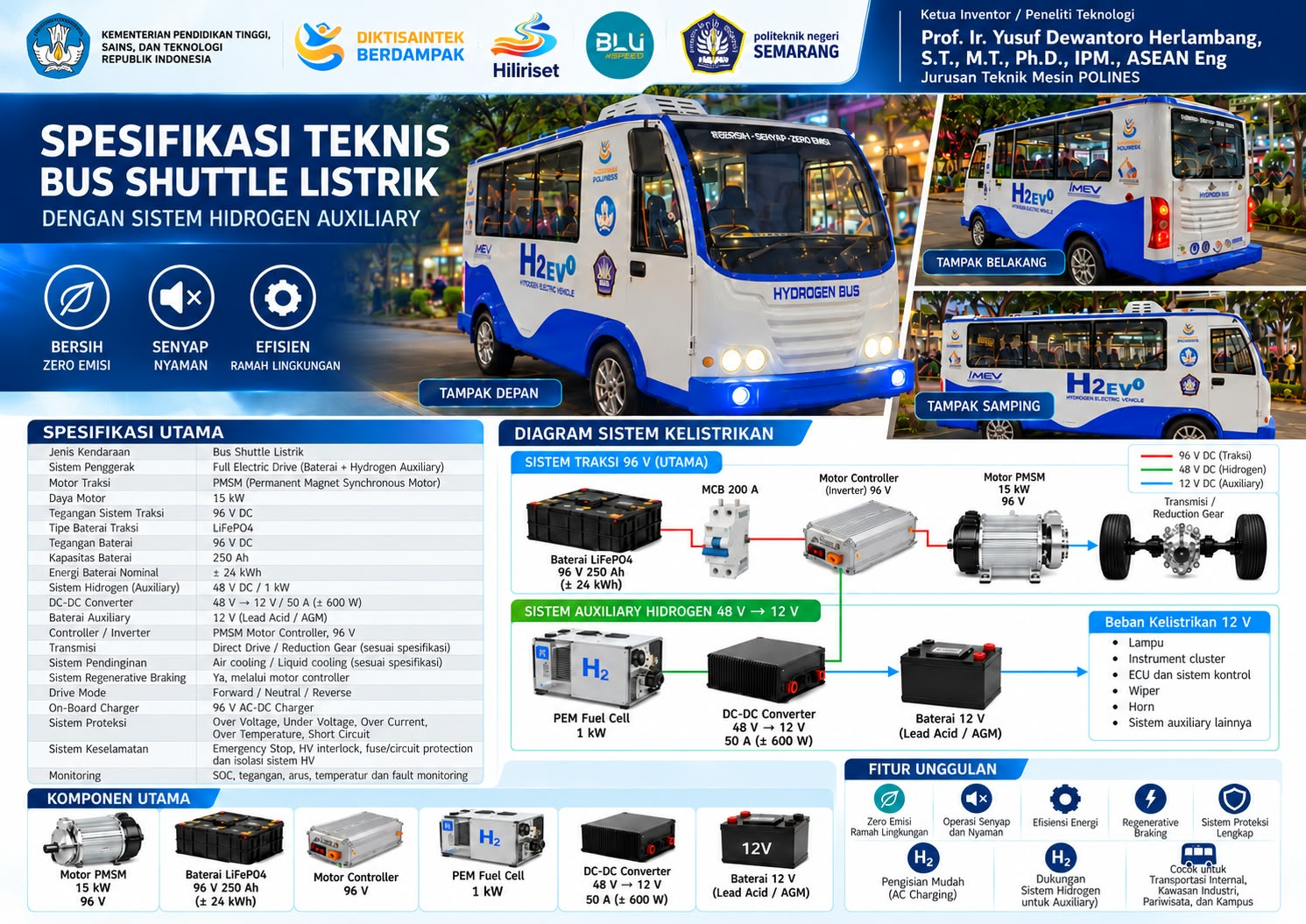
Technically, this shuttle bus is designed using a 15 kW Permanent Magnet Synchronous Motor (PMSM) with a 96 V DC traction system. The main energy source comes from a 96 V lithium iron phosphate (LiFePO4) battery with a capacity of 250 Ah, providing a nominal energy of approximately 24 kWh.
Meanwhile, the hydrogen system utilizes a 1 kW PEM fuel cell on a 48 V line. Energy from this system is converted via a 48 V to 12 V DC-DC converter with a capacity of 50 A or approximately 600 W to support the vehicle's auxiliary electrical needs, such as lights, instrument panels, the ECU and control system, wipers, and the horn.
In this design, the hydrogen fuel cell is not used to directly drive the traction motor. The battery remains the primary energy source to propel the vehicle, while the hydrogen system functions to support auxiliary electrical requirements.
Prof. Ir. Yusuf Dewantoro Herlambang, S.T., M.T., Ph.D., IPM., ASEAN Eng., explained that the integration of battery and hydrogen technologies in this design is directed toward exploring the utilization of two energy systems with distinct functions.
“Through this design, we aim to develop the integration of battery and hydrogen fuel cell technologies within a single vehicle system. The battery is used as the primary propulsion power source, while the fuel cell supports auxiliary electrical needs. This approach provides a space for applied research development in the fields of electric vehicles and energy management,” he explained.
In addition to integrating battery and hydrogen technologies, the design of this electric shuttle bus includes several features that support energy efficiency and safety. One of these is regenerative braking via the motor controller, which allows energy from the braking process to be recaptured within the vehicle system.
The design also includes battery charging using a 96 V AC/DC on-board charger as well as a battery and electrical condition monitoring system. The monitored parameters include the state of charge (SoC), voltage, current, temperature, and system faults.
Planned protection features include safeguards against overvoltage, undervoltage, overcurrent, overtemperature, and short circuits. Additionally, an emergency stop and high-voltage interlock are included as part of operational risk control measures for the vehicle.
The Director of Polines, Dr. Garup Lambang Goro, S.T., M.T., emphasized the importance of this innovation in strengthening vocational education and applied research.
“The development of technology like this is part of Polines' effort to drive innovation that is relevant to the needs of industry and society. We want to ensure that vocational education not only produces competent graduates but also contributes through applied research and technological developments that hold the potential for real-world benefits,” he stated.
Technical testing and validation remain necessary to ensure vehicle performance, component reliability, hydrogen usage safety, and operational feasibility before the design is developed for wider application.
The design of this electric shuttle bus with an auxiliary hydrogen system has the potential to be developed to support internal campus transportation, industrial estates, and tourism areas that require regional-scale mobility services.
Beyond its potential application, this development opens up research opportunities for lecturers and students in the fields of electric vehicles, control systems, energy management, battery technology, and hydrogen utilization.
The vehicle's zero-emission claim must be understood in the context of having no direct exhaust emissions while in operation. The overall emission impact still depends on the electricity source and the hydrogen production process utilized.
Through the development of this innovation, Polines continues to strengthen the role of vocational education in producing applied technologies that are relevant to industrial advancements and societal needs. This effort is aligned with the spirit of Achieving Vocational Education to drive innovation, strengthen research, and support the development of sustainable mobility.
This development is part of Polines' efforts to promote applied research that integrates electric vehicle technology, control systems, energy management, and hydrogen utilization.
Technically, this shuttle bus is designed using a 15 kW Permanent Magnet Synchronous Motor (PMSM) with a 96 V DC traction system. The main energy source comes from a 96 V lithium iron phosphate (LiFePO4) battery with a capacity of 250 Ah, providing a nominal energy of approximately 24 kWh.
Meanwhile, the hydrogen system utilizes a 1 kW PEM fuel cell on a 48 V line. Energy from this system is converted via a 48 V to 12 V DC-DC converter with a capacity of 50 A or approximately 600 W to support the vehicle's auxiliary electrical needs, such as lights, instrument panels, the ECU and control system, wipers, and the horn.
In this design, the hydrogen fuel cell is not used to directly drive the traction motor. The battery remains the primary energy source to propel the vehicle, while the hydrogen system functions to support auxiliary electrical requirements.
Prof. Ir. Yusuf Dewantoro Herlambang, S.T., M.T., Ph.D., IPM., ASEAN Eng., explained that the integration of battery and hydrogen technologies in this design is directed toward exploring the utilization of two energy systems with distinct functions.
“Through this design, we aim to develop the integration of battery and hydrogen fuel cell technologies within a single vehicle system. The battery is used as the primary propulsion power source, while the fuel cell supports auxiliary electrical needs. This approach provides a space for applied research development in the fields of electric vehicles and energy management,” he explained.
In addition to integrating battery and hydrogen technologies, the design of this electric shuttle bus includes several features that support energy efficiency and safety. One of these is regenerative braking via the motor controller, which allows energy from the braking process to be recaptured within the vehicle system.
The design also includes battery charging using a 96 V AC/DC on-board charger as well as a battery and electrical condition monitoring system. The monitored parameters include the state of charge (SoC), voltage, current, temperature, and system faults.
Planned protection features include safeguards against overvoltage, undervoltage, overcurrent, overtemperature, and short circuits. Additionally, an emergency stop and high-voltage interlock are included as part of operational risk control measures for the vehicle.
The Director of Polines, Dr. Garup Lambang Goro, S.T., M.T., emphasized the importance of this innovation in strengthening vocational education and applied research.
“The development of technology like this is part of Polines' effort to drive innovation that is relevant to the needs of industry and society. We want to ensure that vocational education not only produces competent graduates but also contributes through applied research and technological developments that hold the potential for real-world benefits,” he stated.
Technical testing and validation remain necessary to ensure vehicle performance, component reliability, hydrogen usage safety, and operational feasibility before the design is developed for wider application.
The design of this electric shuttle bus with an auxiliary hydrogen system has the potential to be developed to support internal campus transportation, industrial estates, and tourism areas that require regional-scale mobility services.
Beyond its potential application, this development opens up research opportunities for lecturers and students in the fields of electric vehicles, control systems, energy management, battery technology, and hydrogen utilization.
The vehicle's zero-emission claim must be understood in the context of having no direct exhaust emissions while in operation. The overall emission impact still depends on the electricity source and the hydrogen production process utilized.
Through the development of this innovation, Polines continues to strengthen the role of vocational education in producing applied technologies that are relevant to industrial advancements and societal needs. This effort is aligned with the spirit of Achieving Vocational Education to drive innovation, strengthen research, and support the development of sustainable mobility.
Photo Gallery (10 foto)
Klik untuk perbesar
Klik untuk perbesar
Klik untuk perbesar
Klik untuk perbesar
Klik untuk perbesar
Klik untuk perbesar
Klik untuk perbesar
Klik untuk perbesar
Klik untuk perbesar
Klik untuk perbesar
1 / 10