
Strengthening Graduate Competencies, Polines Partners with Professional Certification Body
Satria Dwiangga Sihantoro
Author
48
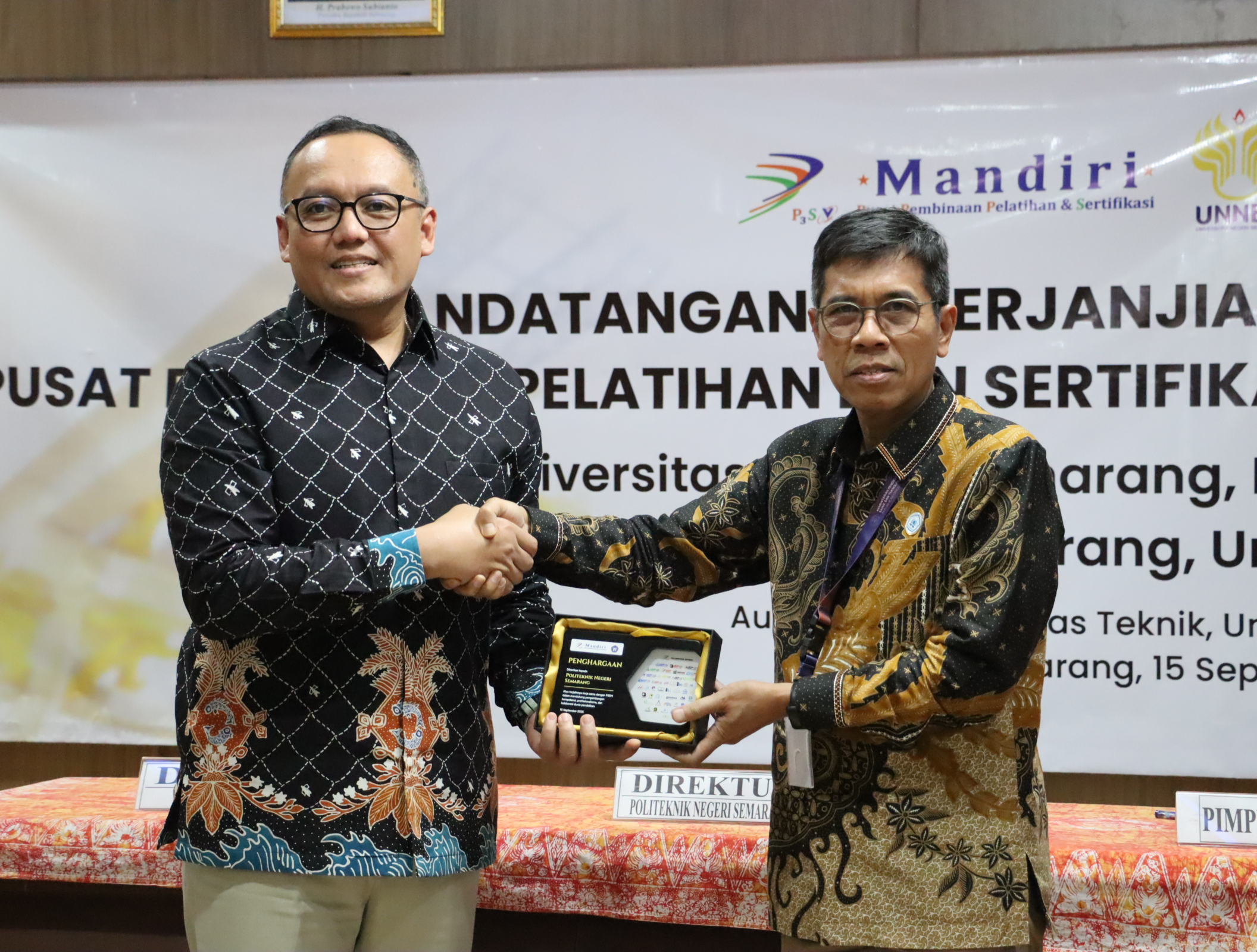
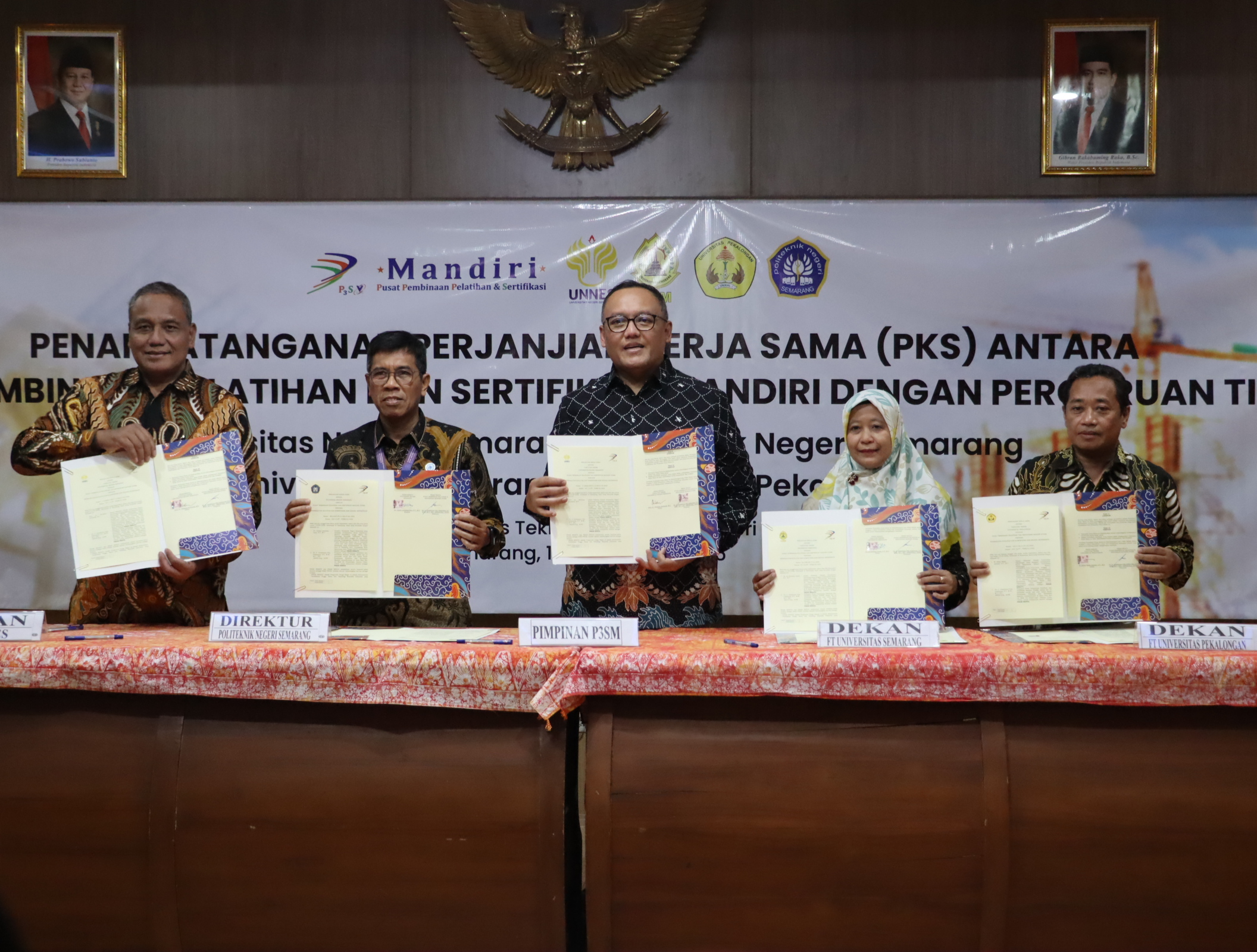
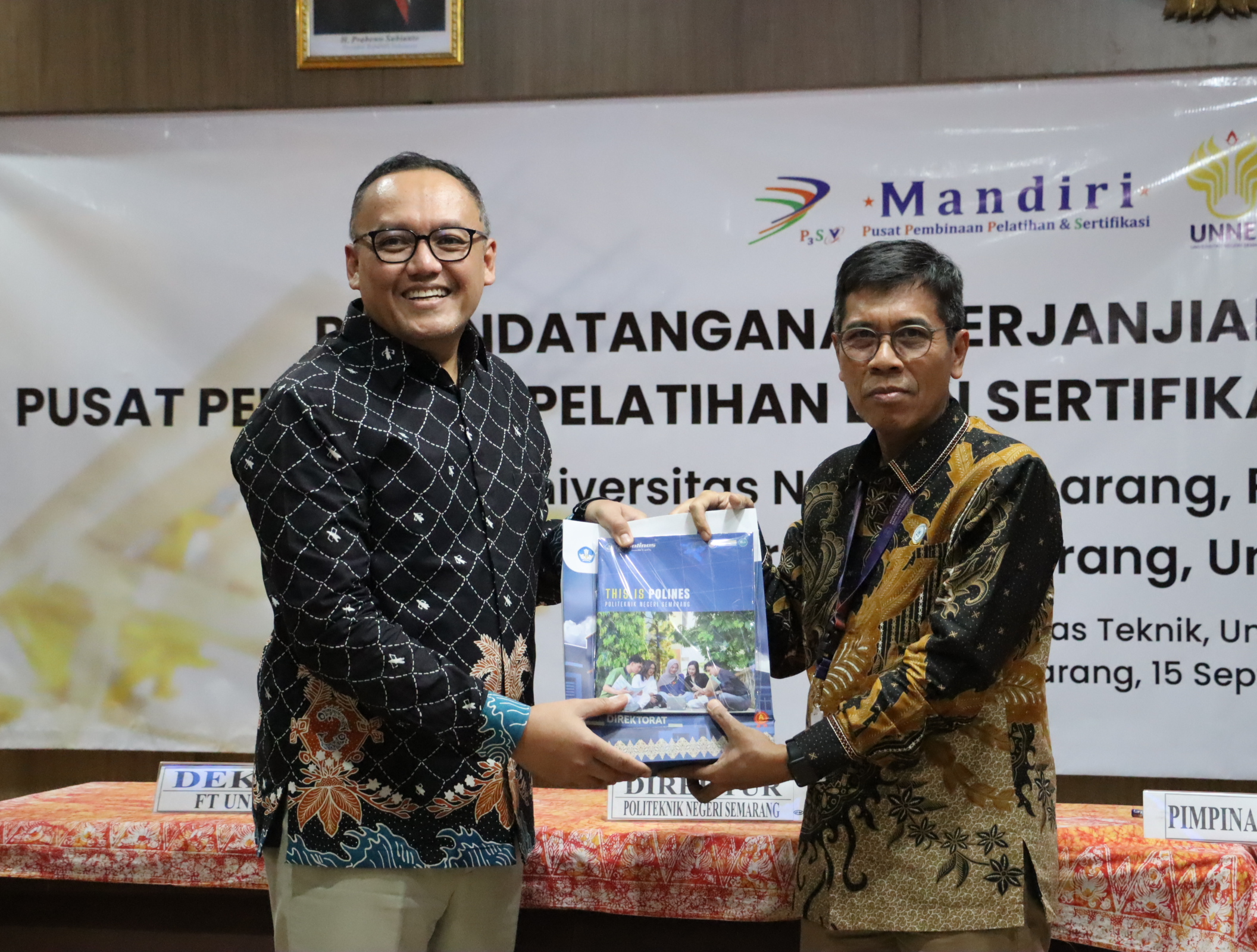
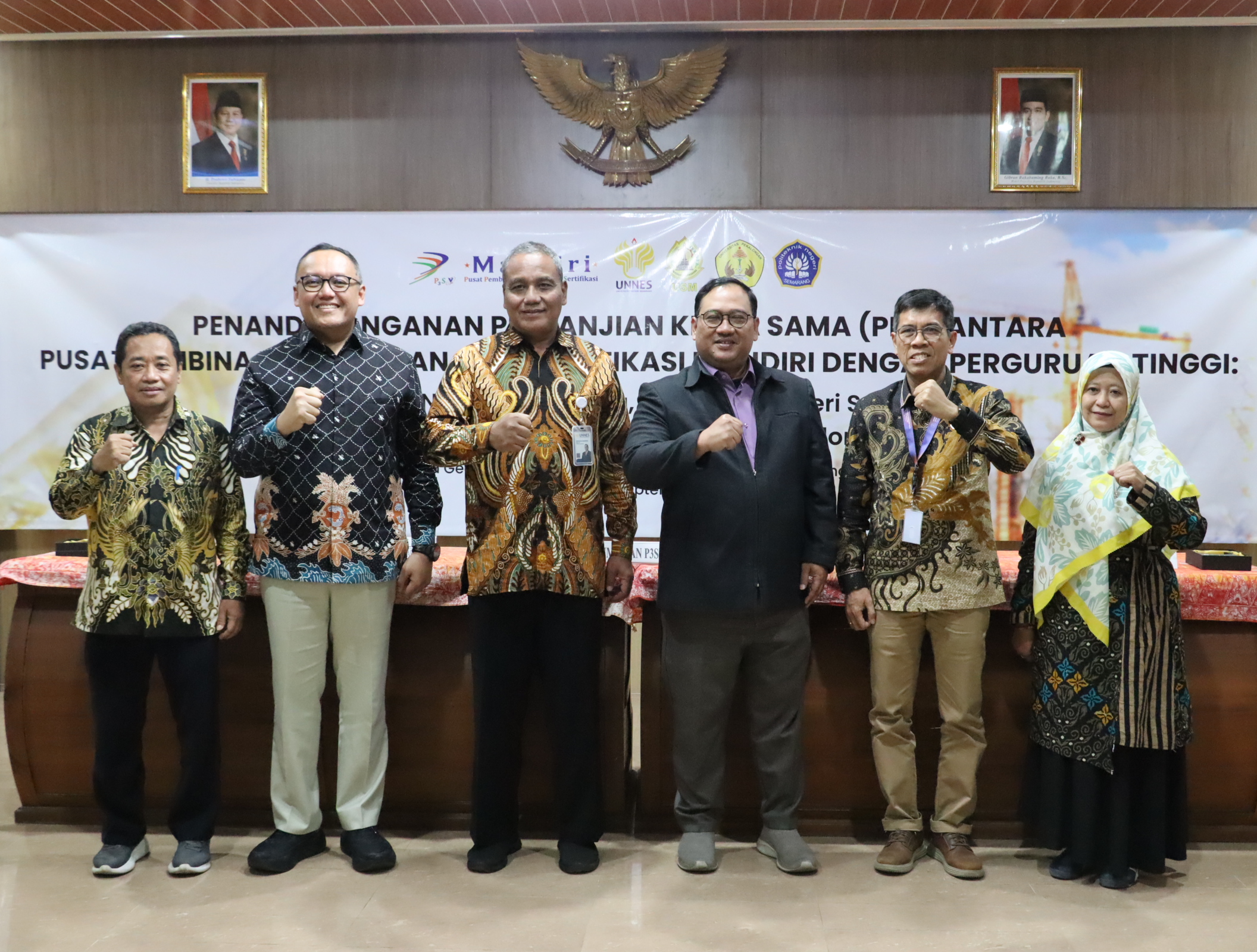
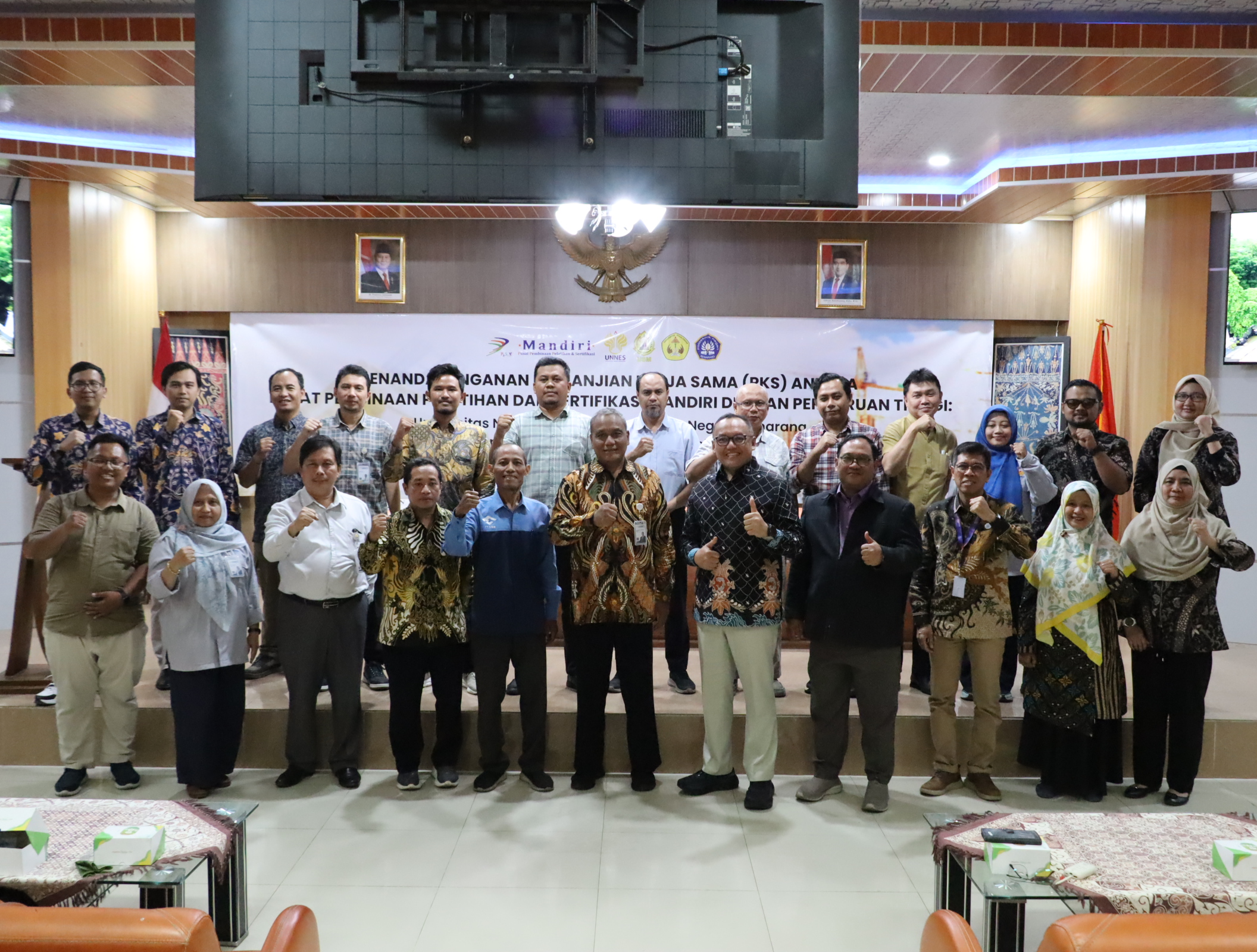
SEMARANG – Semarang State Polytechnic (Polines) continues to strengthen its commitment to improving the quality of its graduates through the reinforcement of competency certification. This commitment is realized through the Signing of a Cooperation Agreement (PKS) between the Center for Coaching, Training, and Independent Certification and a number of higher education institutions, held in the Hall of the Faculty of Engineering Building, Universitas Negeri Semarang (UNNES), Tuesday (9/15/2026).
The event was attended directly by the Director of Polines, Dr. Garup Lambang Goro, S.T., M.T. The collaboration involved the Center for Training Development and Independent Certification, together with Semarang State University, Semarang State Polytechnic, University of Semarang, and Pekalongan University.
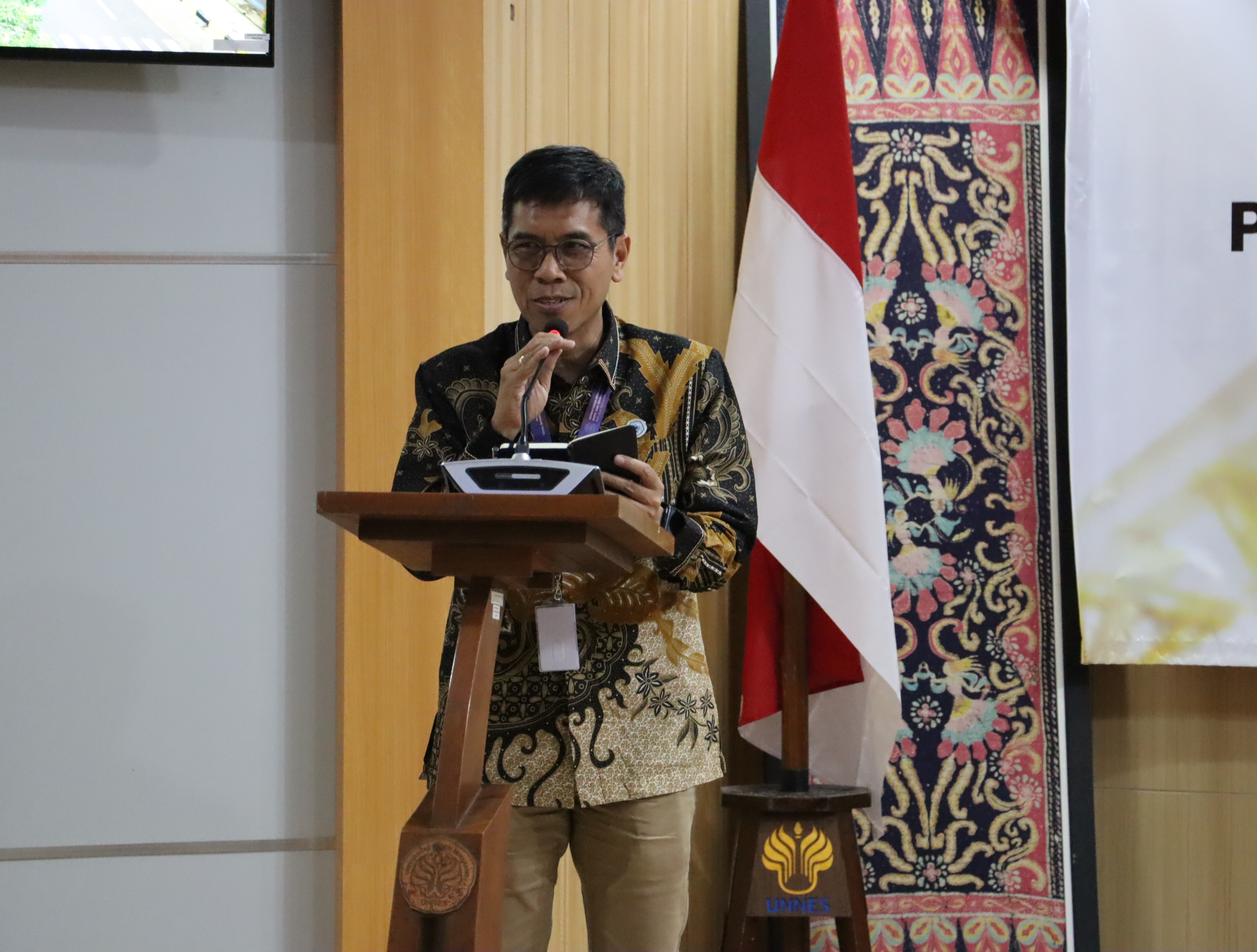
In his remarks, the Director of Polines expressed his appreciation for the realization of this collaboration. According to him, collaboration between higher education institutions, government, industry, and certification bodies is an important part of ensuring that graduates possess competencies that align with the needs of the working world.
“Partnering with the government, partnering with industry—that is the most important thing. Then also partnering with partners, particularly in how to ensure that our graduates are truly of high quality,” he stated.
He explained that Polines has consistently paid attention to competency certification for both students and graduates. However, the evolving needs of the working world demand the strengthening and expansion of access to certification through professional certification bodies.
“Praise be to God, at Polines, our graduates have already been certified for P1 from the banking sector itself. However, P1 has limitations, so in the future, we must collaborate with P3 for certification through Professional Certification Bodies (LSPs),” he explained.
According to him, cooperation with certification bodies and professional associations is expected to open broader opportunities for lecturers and students to obtain competency certification.
He emphasized that competency certification is not merely an additional document for graduates, but also serves as an instrument to ensure that the competencies taught in higher education institutions remain relevant to developments in the working world.
“Competency certification is indeed not just about proof, but also about self-correction for us, regarding how up-to-date the knowledge we impart is. Thus, our perspective will become broader, so that we do not just remain within the campus, but continuously observe what is moving outside,” he expressed.
He further added that the connection between higher education institutions and the professional world is becoming increasingly important amid rapid technological changes and industry demands. Therefore, higher education institutions need to continually open themselves up to the competency developments required in the field.
Through this collaboration, Polines hopes that synergy with certification bodies, professional associations, the government, and industry can continue to be developed to support the improvement of human resource quality and strengthen the competitiveness of its graduates.
The signing of this Cooperation Agreement also serves as part of the collective effort of higher education institutions to produce graduates who possess not only academic competence, but also professional competence that is recognized and relevant to the needs of the working world.
In his remarks, the Director of Polines expressed his appreciation for the realization of this collaboration. According to him, collaboration between higher education institutions, government, industry, and certification bodies is an important part of ensuring that graduates possess competencies that align with the needs of the working world.
“Partnering with the government, partnering with industry—that is the most important thing. Then also partnering with partners, particularly in how to ensure that our graduates are truly of high quality,” he stated.
He explained that Polines has consistently paid attention to competency certification for both students and graduates. However, the evolving needs of the working world demand the strengthening and expansion of access to certification through professional certification bodies.
“Praise be to God, at Polines, our graduates have already been certified for P1 from the banking sector itself. However, P1 has limitations, so in the future, we must collaborate with P3 for certification through Professional Certification Bodies (LSPs),” he explained.
According to him, cooperation with certification bodies and professional associations is expected to open broader opportunities for lecturers and students to obtain competency certification.
He emphasized that competency certification is not merely an additional document for graduates, but also serves as an instrument to ensure that the competencies taught in higher education institutions remain relevant to developments in the working world.
“Competency certification is indeed not just about proof, but also about self-correction for us, regarding how up-to-date the knowledge we impart is. Thus, our perspective will become broader, so that we do not just remain within the campus, but continuously observe what is moving outside,” he expressed.
He further added that the connection between higher education institutions and the professional world is becoming increasingly important amid rapid technological changes and industry demands. Therefore, higher education institutions need to continually open themselves up to the competency developments required in the field.
Through this collaboration, Polines hopes that synergy with certification bodies, professional associations, the government, and industry can continue to be developed to support the improvement of human resource quality and strengthen the competitiveness of its graduates.
The signing of this Cooperation Agreement also serves as part of the collective effort of higher education institutions to produce graduates who possess not only academic competence, but also professional competence that is recognized and relevant to the needs of the working world.
Photo Gallery (5 foto)
Klik untuk perbesar
Klik untuk perbesar
Klik untuk perbesar
Klik untuk perbesar
Klik untuk perbesar
1 / 5