

Polines and UNIMUS Collaborate on Education, Research, and AI Development
Satria Dwiangga Sihantoro
Author
29
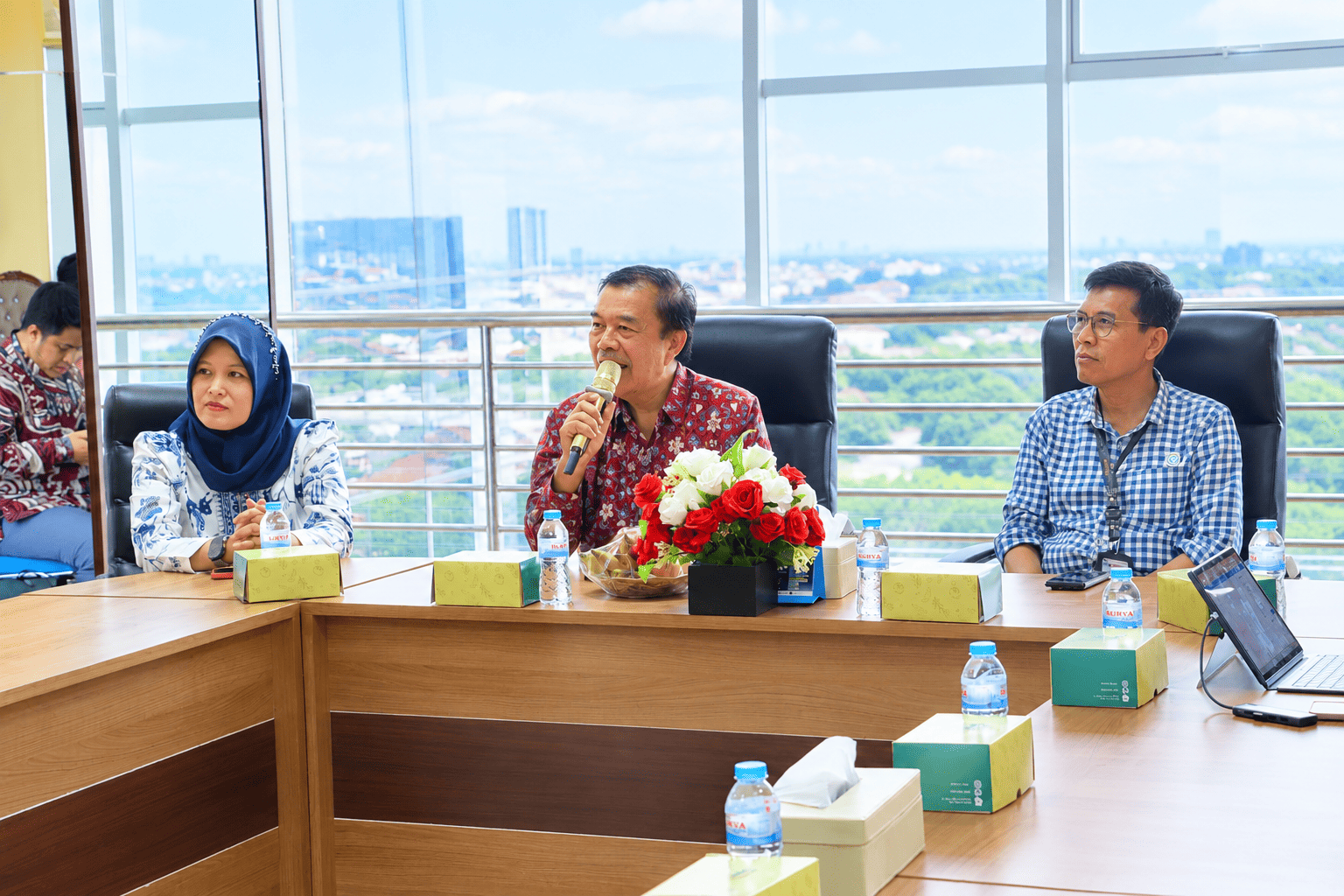
SEMARANG - Semarang State Polytechnic (Polines) is exploring strengthened collaboration with Universitas Muhammadiyah Semarang (UNIMUS) in the fields of education, research, and community service. This commitment to collaboration was marked by the signing of a Memorandum of Understanding (MoU) by the Director of Polines, Dr. Garup Lambang Goro, S.T., M.T., and the Rector of UNIMUS, Prof. Dr. Masrukhi, M.Pd, in the UNIMUS Rector's Room on Tuesday (20/20/26).
Following the signing of the MoU, the event continued with a discussion on the utilization of AI and its relevance to the Sustainable Development Goals (SDGs).
This partnership creates an opportunity for both higher education institutions to mutually strengthen institutional capacity, develop academic activities, and drive innovations that deliver tangible benefits to society.
Polines Director Garup Lambang Goro stated that the development of higher education institutions requires collaboration with various stakeholders, including other higher education institutions. This synergy is essential to expand joint research opportunities, enhance human resource competencies, and strengthen the connection between education and industry needs.
Polines itself continues to develop vocational education oriented toward the needs of industry and society. Established in 1982 under the name Diponegoro University Polytechnic, Polines now offers 27 study programs spanning Diploma Three (D3), Applied Bachelor, and Applied Master in Telecommunication Engineering programs.
With approximately 9,560 students and 355 active lecturers, Polines continuously strives to improve educational quality, lecturer competence, and research productivity. Strengthening partnerships with higher education institutions and industries is part of the effort to enhance learning relevance while broadening the impact of research outputs.
UNIMUS Rector Prof. Dr. Masrukhi, M.Pd. warmly welcomed the visit by the Polines leadership team. He expressed hope that the signed agreement would be followed up with concrete programs supporting the improvement of the quality of education, research, and community service.
Promoting Inclusive and Sustainable AI Development
One of the main agendas during the meeting was a discussion on the development of artificial intelligence and its application to support sustainable development. The discussion was led by Muhammad Yusuf, Ph.D., UNIMUS Vice Rector IV for Cooperation, alongside Prof. Dr. Ir. Kurnianingsih, S.T., M.T., Polines Deputy Director for Cooperation, Public Relations, and Information Systems.
The discussion highlighted the importance of higher education institutions not only keeping pace with technological advancements but also ensuring that their applications address real-world problems. AI holds the potential to support various sectors, ranging from education and healthcare to agriculture and public services. However, its implementation must consider accessibility, efficiency, as well as social and environmental impacts.
One approach discussed was Green AI, which involves the development and utilization of AI with a focus on computational efficiency, energy requirements, and environmental impact. This approach encourages the development of technology that does not merely pursue sophistication, but also considers sustainability and societal benefits.
Another challenge of concern is the digital infrastructure access gap. AI development must account for diverse user conditions so that the benefits of technology are not restricted only to groups with adequate access to devices and internet networks.
Furthermore, human involvement remains a crucial element in AI implementation. Through a human-in-the-loop approach, humans play a role in verifying system outputs, evaluating information accuracy, and ensuring that resulting decisions align with user contexts and needs.
These principles affirm that artificial intelligence must be developed with careful consideration of ethical aspects, responsibility, and human interests. Technology serves as a tool to assist decision-making rather than completely replace human judgment, particularly in matters concerning public safety and interests.
Through this meeting, Polines and UNIMUS have opened opportunities to develop collaborations that connect education, research, and technological innovation. The synergy between the two institutions is expected to foster solutions relevant to societal needs while strengthening the contribution of higher education to sustainable development.
-Polines Public Relations-