

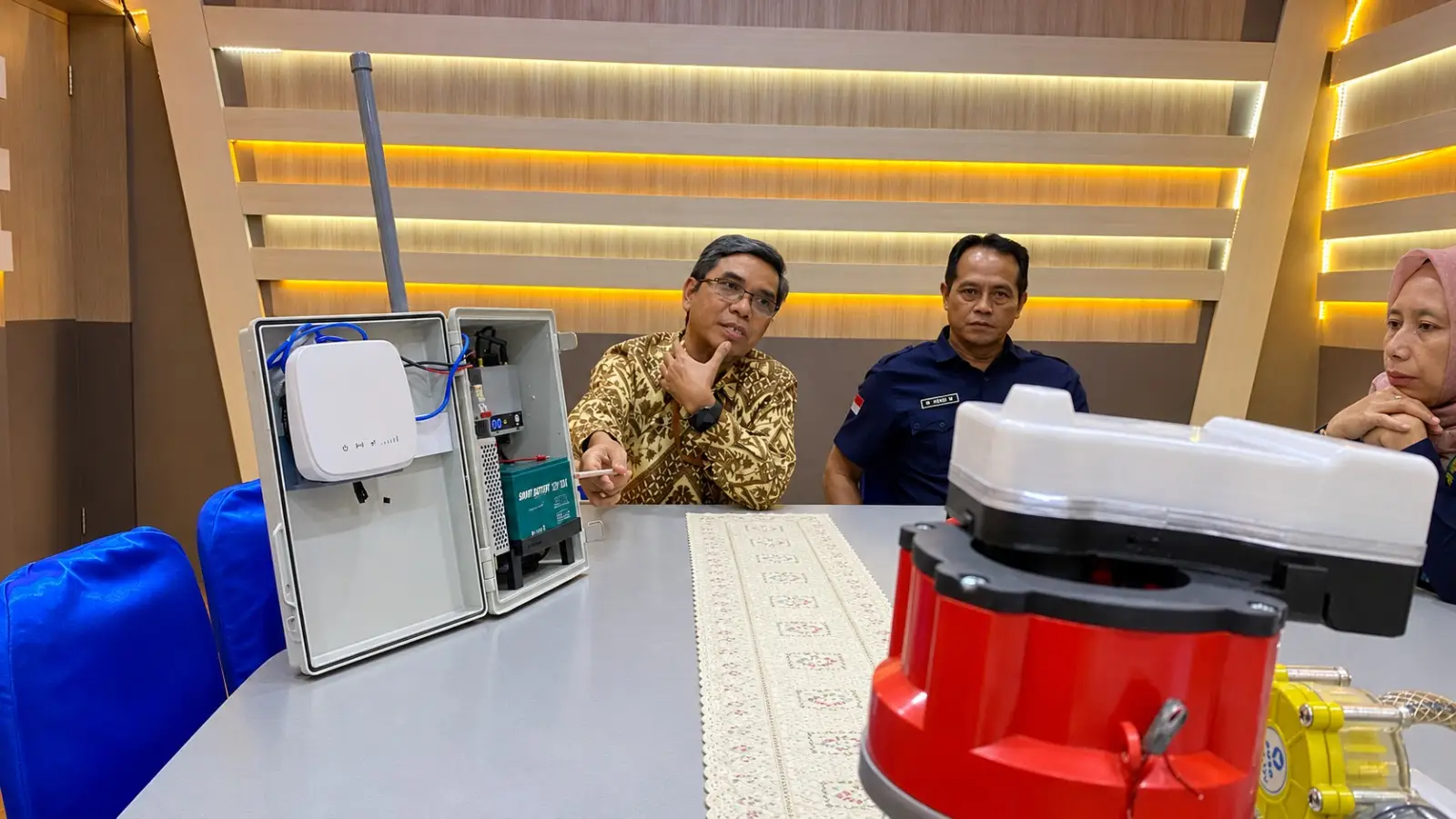
TEGAL – Clear evidence that vocational higher education research does not just end as a pile of reports or displays in the laboratory has been shown again by the Semarang State Polytechnic (Polines). The Smart Water Meter (SWM) innovation is the result of research by a team of Polines lecturers led by Dr. Amin Suharjono, S.T., M.T., has now officially entered a new phase of downstream technology through the implementation of strategic trials with PDAM Tegal City.
This concrete step is a follow-up to the Focus Group Discussion (FGD) which was previously held in Semarang, where the Polines research team explained the solution for digitizing clean water recording.
The main advantage of this Smart Water Meter product is its design which is 100% pure work of Polines' internal team, starting from the circuit design. electronics, casing, and communication system. What's even more amazing is that this innovation is designed to be very operational cost friendly.
"Our product does not require PDAM to replace its customers' analog meters. This tool can simply be installed on top of an existing analog meter, such as a Cyble or Itron meter, and will read the movement of the metal needle automatically," explained Amin in a meeting at the PDAM Tegal office.
The presence of this tool is a major solution to PDAM Tegal's operational challenges. Currently, with a total of around 40,000 customers, PDAM has to deploy 23 meter reading staff door-to-door every day, where one person has to physically check 250 customers' water meters.
With the SWM system from Polines, usage data will be sent directly to PDAM's SQL server via a centralized gateway. This system minimizes monthly physical checks, allows token updates automatically when customers pay bills, and is able to provide early warnings if there is unusual water usage or indications of device error. Interestingly, this system is also equipped with a backup battery, so that data collection remains safe even if a network power outage occurs.
As the first step in this collaboration agreement, PDAM Tegal and the Polines research team will conduct a trial installation of Smart Water Meters at 10 pilot customer points. This installation was deliberately chosen by varying the distance from the closest to the farthest customer from the gateway point to measure signal strength.
"Currently a collaboration has been initiated with an industrial partner for mass production, namely PT Indomaker Indonesia Mandiri, so that commercial prices will be much lower," concluded Amin.
The downstreaming of this technology is expected to not only streamline the performance of PDAM meter reading power, but also prove that the applied research ecosystem at Polines is fully ready to provide real impact, link and match, and become a driving force for digital transformation in the industrial sector public.
Writer : Aditya Putra
Editor : Juli Widiyanto